

Up To 50% Off Leadout Sale
Shop Now
Holiday Gift Guide
Gifts for cyclists who’d rather be riding
Summit+ Exclusive: Extra 10% Cash Back
Shop Eligible Items
Road Bike Disc Brakes
26 results
Gearhead Pick

Shimano
RT-CL800 Rotor - Centerlock
1 color
$52.50 - $80.00
Up to 25% off
(9)
Gearhead Pick

SRAM
Rival E1 AXS Shift/Brake System
1 color
$280.00
(1)

Shimano
RT-CL900 Rotor - Centerlock
1 color
$95.00 - $110.00
(4)
Gearhead Pick

SRAM
Force E1 AXS Shift/Brake System
1 color
$385.00
(2)

Shimano
XT BR-M8110 Flat Mount Brake Caliper
1 color
Current price: $71.25 Original price: $95.00
25% off

Shimano
Dura-Ace BR-R9270 Disc Brake Caliper
1 color
$190.00 - $200.00


Shimano
Ultegra BR-R8170 Disc Brake Caliper
1 color
$100.00

SRAM
CenterLine X Rounded Rotor
1 color
Current price: $65.45 - $79.80 Original price: $84.00
Up to 15% off
(3)

SRAM
Paceline Rounded Rotor
1 color
$40.85 - $43.00
Up to 5% off

Hope
RX4+ Disc Brake Caliper
1 color
$140.00

TRP
Spyre SLC Mechanical Disc Brake Caliper
1 color
$104.99

TRP
Spyre SLC Mechanical Flat Mount Disc Brake Caliper
1 color
$104.99
(1)

SRAM
Centerline XR Rotor - 6 Bolt
1 color
Current price: $82.65 Original price: $87.00
5% off

SRAM
Rival 22/Rival 1 Flat Mount Caliper
1 color
Current price: $104.50 Original price: $110.00
5% off

Campagnolo
AFS Rotor
1 color
$40.95
(1)

TRP
HY/RD Flat Mount Disc Brake Caliper
1 color
$149.99
(1)
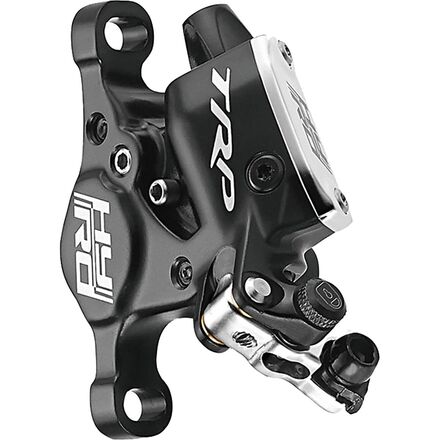
TRP
HY/RD Cable-Actuated Hydraulic Disc Brake
2 colors
Current price: $144.89 - $146.99 Original price: $149.99
Up to 3% off
(3)
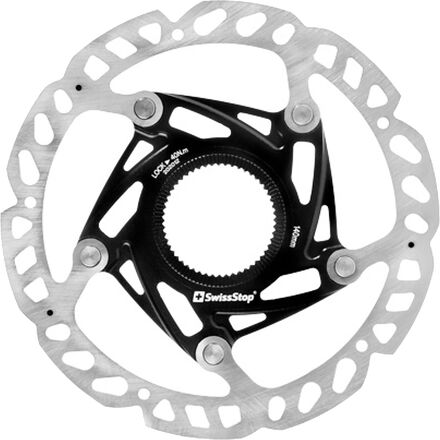
SwissStop
Catalyst Race Centerlock Disc Rotor
1 color
Current price: $85.79 Original price: $94.28
9% off


SRAM
Rival AXS Shifter/Brake System
1 color
Current price: $182.00 Original price: $260.00
30% off

SRAM
Force eTap AXS HRD Disc Brake Caliper
1 color
$92.00

SRAM
Force 22/Force 1 Flat Mount Caliper
1 color
Current price: $99.45 Original price: $117.00
15% off

SRAM
Force 1 Hydraulic Disc Brake
1 color
Current price: $265.20 Original price: $312.00
15% off
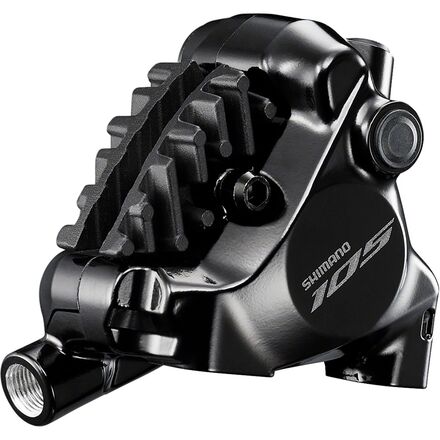
Shimano
105 BR-R7170 Flat Mount Disc Brake Caliper
1 color
$90.00 - $95.00
(1)

Shimano
XTR/Dura-Ace Centerlock Disc Rotor
1 color
$95.00
(8)

Shimano
RS785 Hydraulic Disc Brake Caliper
1 color
Current price: $61.24 Original price: $66.99
9% off
(3)

Campagnolo
03 Rotor
1 color
$69.00
Related Categories
Frequently Asked Questions
What rotor size should I choose for my weight and terrain?
For most road use 160mm is the sweet spot—better stopping power and heat dissipation for standard/heavier riders and hilly terrain; 140mm suits lighter riders and flatter courses where weight savings matter; 180mm+ is for sustained high-speed descents, touring or tandems where maximum stopping and thermal capacity trump added grams.How do rotor materials compare for road-focused performance?
Stainless steel is durable and stable for everyday and endurance use but heavier; aluminum rotors trade some durability for lower weight for riders chasing performance; carbon rotors are the lightest with superior thermal behavior for high-speed applications but require more delicate handling; multi-layer constructions aim to blend lightness and heat resistance for pro-level demands.What is ICE TECHNOLOGY and when is it worth upgrading to those rotors?
ICE TECHNOLOGY rotors use a three-layer sandwich (stainless/aluminum/stainless) and claim roughly a 10% improvement in heat dissipation, with sizes from 140–203mm, so they make sense if you’re doing long descents or weighty competition where reducing fade is a priority.Will switching to disc brakes change my tire clearance or frame/fork fit needs?
Braking power is independent of tire width—disc brakes work across tire widths—but you do need a frame and a relatively stiff fork designed for disc mounts and routing; modern frames generally accommodate internal hose routing for cleaner aero integration.Hydraulic vs mechanical calipers: which should I choose for road riding?
Hydraulic 2‑piston calipers are the industry standard for superior modulation, power and consistent performance—especially sealed systems that are forgiving of hose routing—while mechanical calipers are simpler and less powerful, better reserved for budget or low-maintenance builds.